Welcome! Owner operated MidAtlantic Geophysics is the experienced option for accurate detection of:
• Buried Tanks
• Utilities
• Drums
• Fill Areas/Dumps
• Abandoned Structures
We use the best available equipment including:
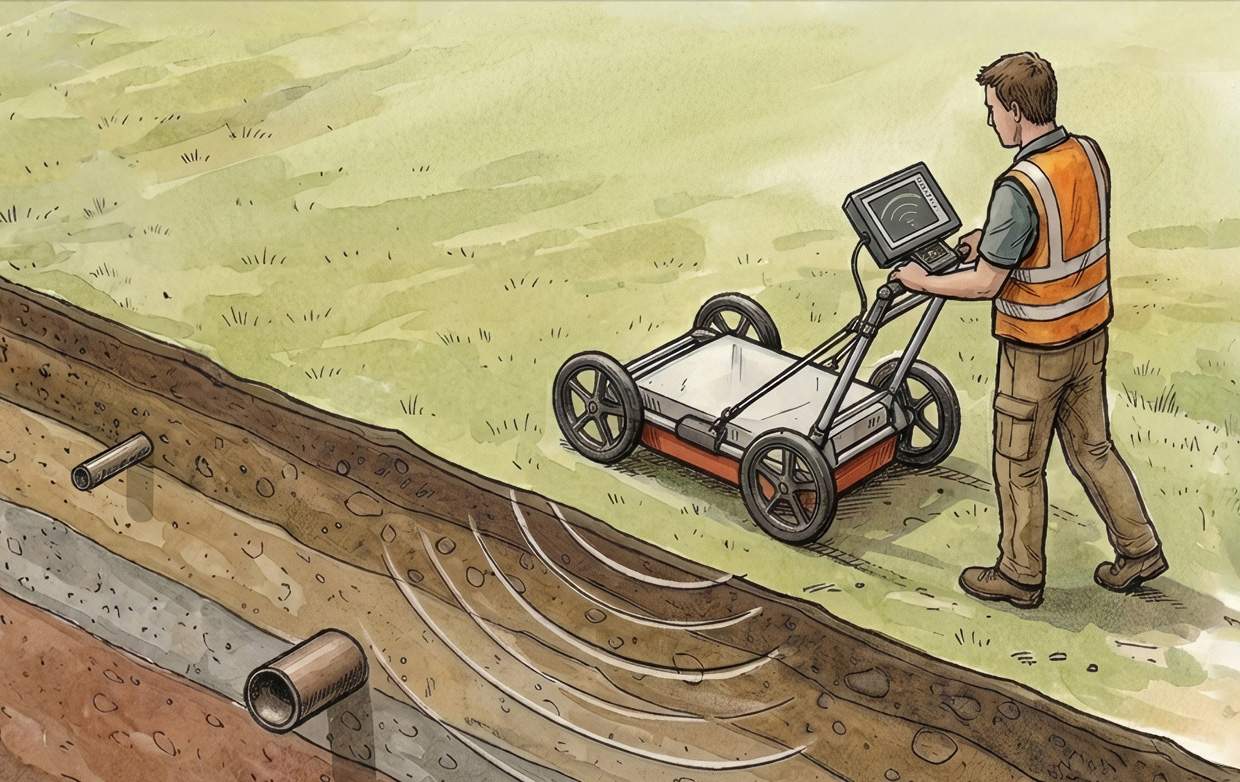
• Ground Penetrating Radar
• ElectroMagnetic Conductivity
• Line Tracing
• Magnetometry
• Metal Detection
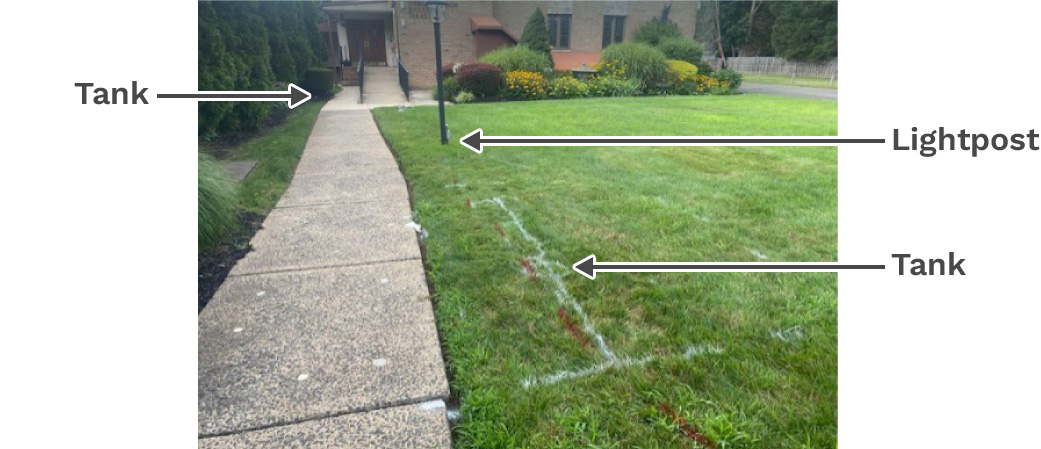
Locating Underground Storage Tanks (USTs)
Identifying underground tanks and other structures before buying property prevents costly surprises and minimizes construction delays. Better to hire a qualified geophysicist (who’s an owner of the company) deploying advanced instrumentation rather than a technician doing a basic tank sweep.
TECHNIQUES AND TOOLS
ElectroMagnetic Conductivity
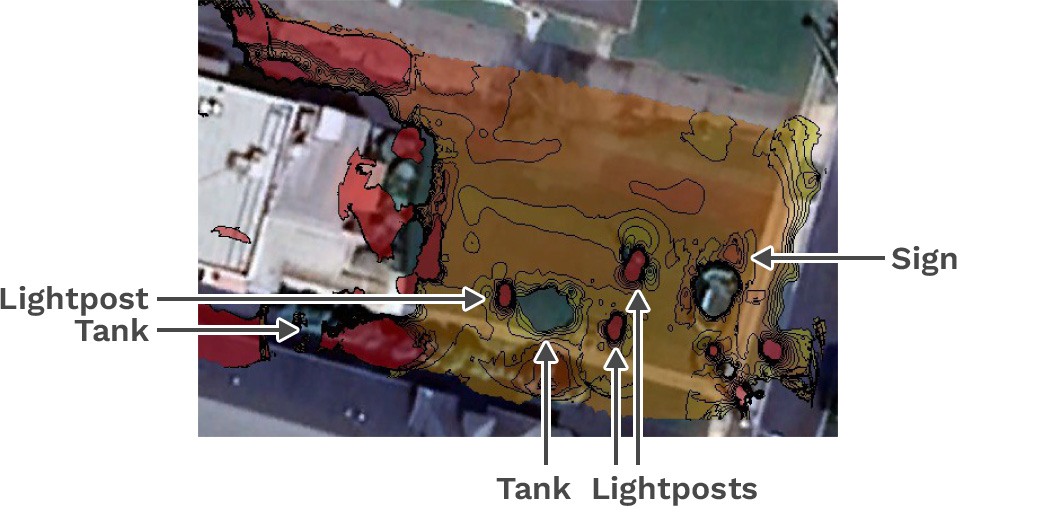
MidAtlantic Geophysics uses both Frequency Domain and Time Domain instruments. EM Conductivity is the most reliable yet fastest method for scanning an area for Underground Storage Tanks (USTs), steel-reinforced (rebar or mesh) septic tanks and concrete slabs, metal debris, buried drums etc.
Ground Penetrating Radar (GPR)
MidAtlantic Geophysics uses a Dual Frequency (300 & 800 MHz) GPR (and 200 MHz and 100 MHz antennas as needed).
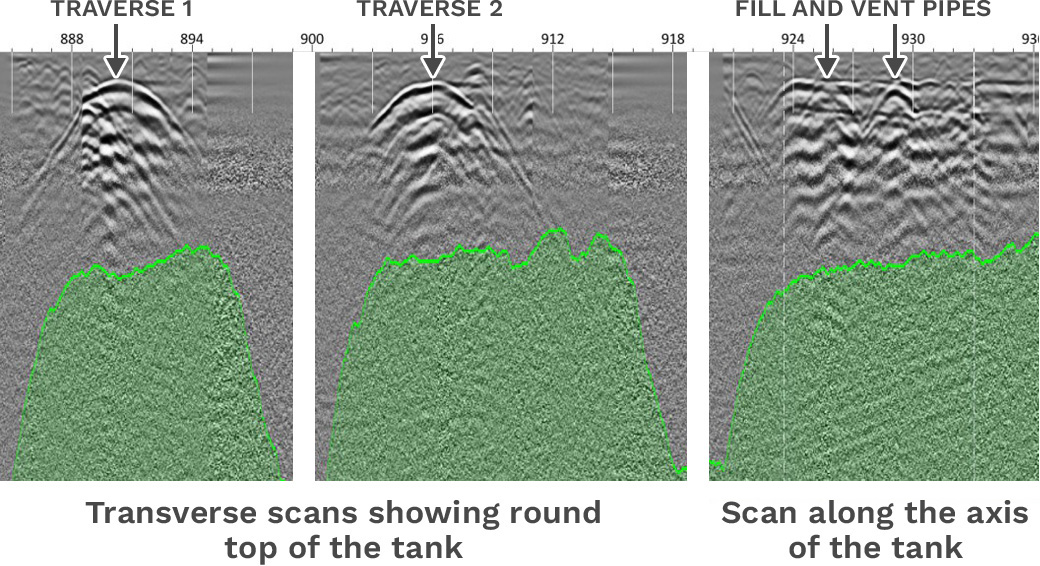
GPR is the best (often only) method for determining what is in the subsurface without the expense and disruption of using an excavator to dig.
Other instruments (EM Conductance, Magnetometer, and other detectors) can locate subsurface anomalies, but GPR is needed to identify whether the buried item is an Underground Storage Tank (UST), steel-reinforced concrete septic tank, or just buried metal debris. The 800 MHz antenna can locate utilities in concrete slabs and identify rebar spacing.
Locating Buried Utilities
Finding known and unknown buried utilities requires using multiple tools in several different modes.
TECHNIQUES AND TOOLS
Line Tracing
Passive mode detects 60 Hz AC current as well as very low frequency (VLF) radio waves transmitted by the US Navy to communicate with nuclear submarines. Passive mode is excellent for indicating that a buried utility is present but can’t distinguish what kind of utility.
Active mode uses a transmitter set to a user-specified frequency that induces an EM signal into the earth that will be picked up by linear conductive features such as wires or pipes. Active mode can identify sections of utilities that are too short to be detected in Passive mode.
Direct-Connect mode is used when a pipe or wire can be clipped on to so that the transmitter is directly sending a user-specified frequency signal on a utility. This allows the geophysicist to identify where specific utilities are and differentiate between multiple utilities, if present. Direct-connect mode also allows the geophysicist to determine the depth of the utility.
Ground Penetrating Radar
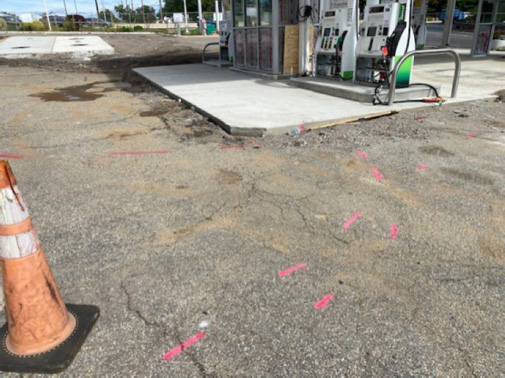
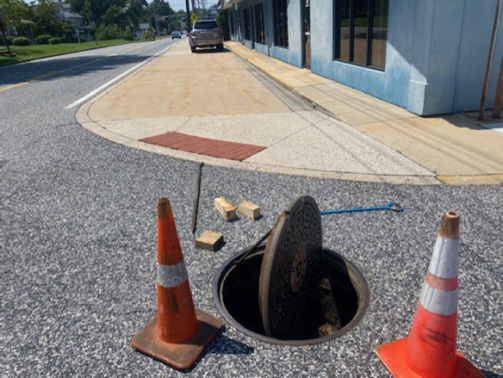
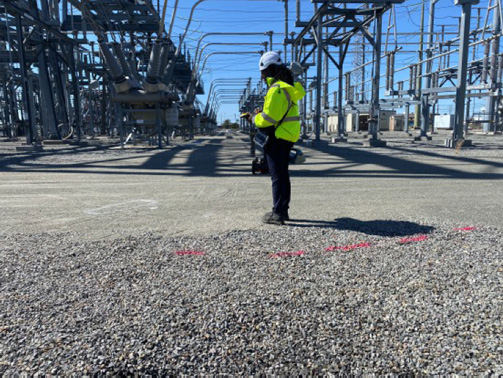
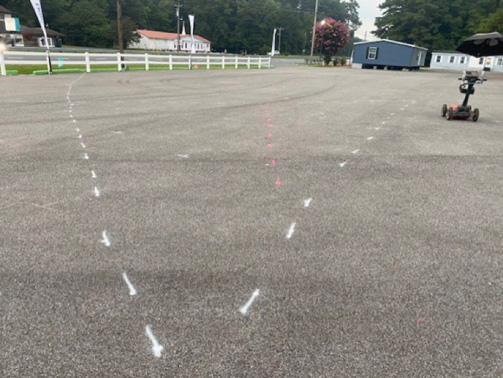
Ground-penetrating radar (GPR) is used after all of the modes of the Line Tracer have been used. GPR can image non-conductive utilities such as concrete, terra cotta (clay), or PVC sewer lines that the line tracer can’t detect. In some circumstances GPR can show a trench–the utility may be too deep (sewer) or too small (residential gas line) to show on radar but the change from native soil to trench backfill is different enough to reveal the presence of the buried utility. GPR data are difficult to interpret, hence the need for a trained and experienced geophysicist!
About MidAtlantic Geophysics
Glen Carleton is the Founder and President of MidAtlantic Geophysics bringing decades of experience in the environmental field with specialized expertise in geophysics, hydrogeology, contaminated site investigation.
He holds a Masters degree in Engineering Geology from Drexel University and a Bachelors degree in Geology with a minor in Mathematics.
 Contact
Glen Carleton
609-737-7387
glen@midatlanticgeophysics.com
124 River Dr.
Titusville, NJ 08560